|
Thu, November 12 2026
|
Your AI-powered news summary on
The AI Executive Brief
|
|
We synthesized 47 articles so you don't have to, saving you approximately 3 hours of reading time.
|
 | Ai Governance and Policy Developments Kenya is advancing its AI governance framework, incorporating a national strategy, draft policies, and an AI Bill to ensure responsible AI adoption and innovation leadership. This framework aims to harmonize governance instruments and address accountability and constitutional rights concerns.
Similarly, governance is increasingly seen as crucial for AI business adoption, with effective frameworks facilitating innovation and risk mitigation. Governance platforms could become essential accelerators in AI deployment.
At the Chartered Institute of Directors conference in Lagos, experts emphasized the importance of AI governance for ethical adoption and board accountability in decision-making.
In the UK, IBM highlighted the gap in AI governance among firms, with many unable to prove control over their AI systems, stressing the need for integrated governance processes. |
 | Enterprise Adoption and Operational Ai Interactive Australia is embedding AI across its operations through its 'Customer Zero' program, enhancing AI literacy and operational efficiency. This initiative aims to significantly improve workflows and employee upskilling.
Indian AI startups are expanding into the US market, adapting their solutions to meet enterprise needs like integration and security, leveraging their domestic experience for global competitiveness.
Hitachi Vantara has enhanced its VSP One Object and Hitachi iQ portfolio to support enterprise AI, simplifying data infrastructure deployment and improving analytics capabilities for scalable AI adoption. |
 | Ai in Financial Services and Banking JPMorgan Chase CEO Jamie Dimon warns of risks associated with AI agents managing banking payments, likening AI's rise to a 'tsunami' and emphasizing the need for proactive management of its implications. Major banks are restricting AI agents to prevent unauthorized transactions.
OutSystems introduced the Agentic First Notice of Loss solution for auto insurers, integrating AI with claims systems to modernize reporting, enhance communication, and improve policyholder experiences, while maintaining human oversight. |
 | Ai Product Launches and Innovations Alphabet has unveiled two new TPU systems, the TPU 8i Max and TPU 8tx, to bolster enterprise AI capabilities, focusing on compute density and data sovereignty. These advancements aim to strengthen Alphabet's position in AI hardware.
Perplexity showcased a zombie shooter game using Anthropic's Fable 5.2 AI model, demonstrating AI's potential in streamlining game development processes.
Meta has expanded its Muse AI to Wear OS devices, introducing new features like project management and task optimization, reflecting the growing demand for AI solutions that enhance user experience. |
 | Ai Security and Cyber Threats ThreatBook was recognized as a 'Strong Performer' in AI security, with its TDP product offering advanced threat detection and automated response capabilities. This positions ThreatBook as a leader in AI-driven cybersecurity solutions.
The Azul report highlights a significant AI vulnerability gap, with 85% of organizations facing incidents due to slow patching. This emphasizes the need for faster security measures against AI-driven threats.
Google Cloud's forecast predicts a shift in AI security strategy, with attackers focusing on decision manipulation rather than data theft. Organizations must adapt their security strategies to counter these evolving threats. |
 | Geopolitical Dynamics in Ai Development Community opposition to data centers in regions like Spartanburg, South Carolina, poses challenges for AI infrastructure development, affecting companies like OpenAI preparing for IPOs. This resistance highlights the need for AI leaders to consider regulatory and community dynamics.
Europe faces AI dependencies on US technology, as seen in a recent incident involving OpenAI-driven agents. Leaders are urged to diversify AI resources and collaborate with China on AI standards and cyber defense capabilities.
AMD challenges the narrative that Nvidia and Arm CPUs are purpose-built for agentic AI, emphasizing the need for a diverse CPU portfolio to address varying AI workloads. |
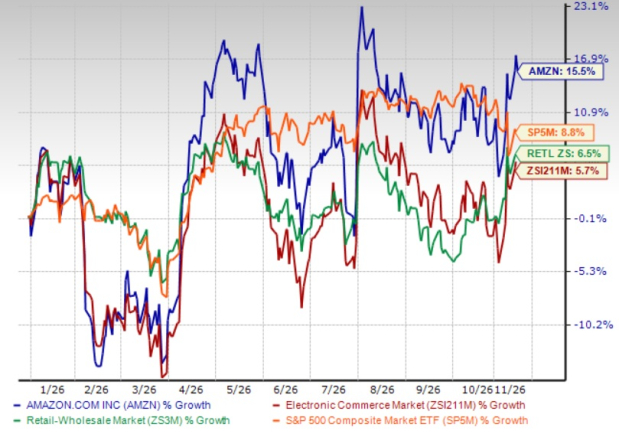 | Ai Infrastructure Investments Amazon's substantial AI infrastructure investments have impacted cash flow, with projected capex reaching $220 billion by 2026. Despite this, Amazon's core business remains strong, driven by AI's future revenue potential.
The enterprise AI landscape faces stress tests, particularly regarding Nvidia's chip architecture and global energy logistics, impacting AI infrastructure. Supermicro is shipping next-generation servers with AMD EPYC CPUs, supporting high-performance AI systems for enterprise deployment.
Amazon's stake in Anthropic significantly contributes to its future pretax profit, illustrating the strategic importance of AI investments in driving business growth. |
|
If you have any questions, feel free to message us at info@topiq.pro.
|
|
Copyright © 2026 NewsFuel. All rights reserved.
|
|
|