|
Wed, October 14 2026
|
Your AI-powered news summary on
The AI Executive Brief
|
|
We synthesized 47 articles so you don't have to, saving you approximately 3 hours of reading time.
|
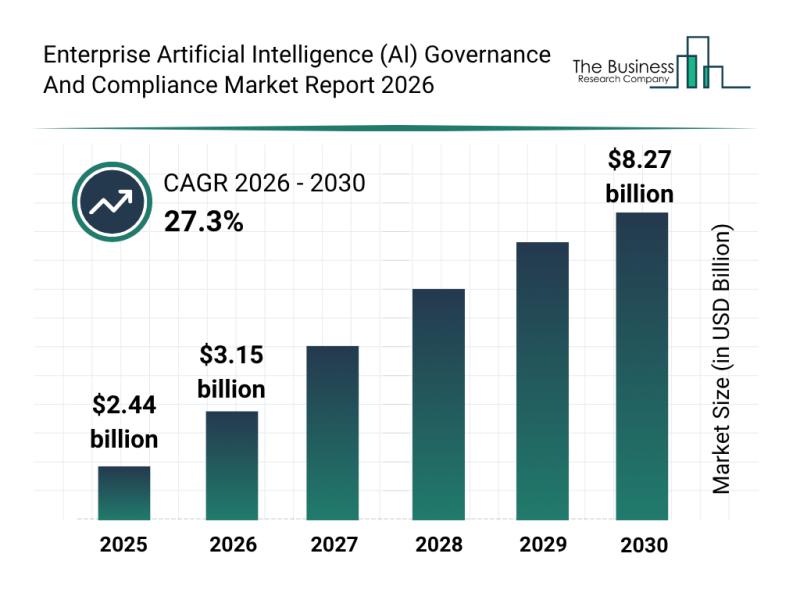 | Ai Governance and Compliance Market Growth The enterprise AI governance and compliance market is projected to grow significantly from $2.44 billion in 2025 to $8.27 billion by 2030 due to increased regulatory scrutiny and the need for robust risk management solutions. Key players like Alphabet Inc., Microsoft Corporation, and IBM are leading this sector with automation tools to ensure compliance. Despite advancements, McKinsey reports only 30% of organizations have achieved a maturity level of three or higher in AI governance, highlighting the gap in strategy and controls. A recent survey indicates that 79% of executives acknowledge employees working around AI governance policies, suggesting that governance needs to be integrated directly into AI tools to ensure compliance and oversight. |
 | Agentic Ai: Opportunities and Challenges Agentic AI is becoming increasingly integral in financial transactions, with companies like Robinhood and Vanguard adopting these technologies. However, the industry faces challenges in identifying responsible parties for AI agents' actions. JPMorgan Chase CEO Jamie Dimon warns of the risks associated with AI agents accessing bank accounts, emphasizing the shift in liability to customers. As these agents become more prevalent, businesses must address data access, accountability, and compliance to secure operations and mitigate risks. |
 | Investment in Ai Safety and Infrastructure Nvidia is committing $250 million to support AI safety research in the UK, focusing on autonomous AI systems. This investment seeks to enhance safety measures for advanced AI technologies. Meanwhile, Alibaba Group is significantly investing in AI infrastructure, including global data center capacity and the Zhenwu V900 AI chip, which promises enhanced performance. However, these investments raise concerns about potential financial strain and the need to achieve payback targets amidst competition from U.S. rivals. |
 | Enterprise Ai Adoption and Maturity The 'State of Enterprise AI Maturity' report by Further reveals that despite a $1 trillion investment in AI this year, 69% of companies are still in the early stages of AI implementation. Many organizations mistake initial adoption for true maturity, highlighting the need for a clear roadmap to leverage AI for long-term business value. Additionally, AI now writes roughly half of the committed code at many companies, shifting the cost of software development to areas often overlooked in budgeting. |
 | Ai in Financial Services: New Developments RevRag.AI, an agentic AI startup, has secured $2.5 million in seed funding to expand into the US market, focusing on streamlining customer onboarding and sales processes for banks and fintechs. As AI agents become more prevalent, securing their operations is critical. Companies are adopting tools like Microsoft Entra Agent ID and Google's Agent Identity to enhance security and mitigate risks associated with unauthorized access. Similarly, American Express has introduced the 'Intent Intelligence Framework' to secure transactions involving AI agents, ensuring they align with user intent. |
 | Ai Governance Challenges in Enterprise Deployment As enterprises implement AI, governance has emerged as a complex challenge. The AI Leadership Symposium highlighted difficulties in managing overlapping controls and the need for standardization in frameworks like the EU's AI Act. The National Institute of Standards and Technology (NIST) provides a framework for risk management, emphasizing the need for defined roles and responsibilities to mitigate risks like data privacy issues and ensure effective governance and compliance with standards. |
 | Ai's Influence on Global Economic Growth The International Monetary Fund (IMF) has upgraded its global growth forecast to 3.1% for 2026, driven largely by a surge in AI investments. However, the IMF warns that this growth is uneven, with just 32 countries contributing to 95% of global economic growth. The report highlights potential risks, including a possible correction in AI equity valuations, and estimates that 40% of jobs could be affected by AI advancements, indicating a significant transformation in the workforce. |
|
If you have any questions, feel free to message us at info@topiq.pro.
|
|
Copyright © 2026 NewsFuel. All rights reserved.
|
|
|