|
Sat, August 29 2026
|
Your AI-powered news summary on
The AI Executive Brief
|
|
We synthesized 44 articles so you don't have to, saving you approximately 3 hours of reading time.
|
 | Regulation and Governance Concerns for Ai Agents The Linux Foundation has launched the x402 Foundation to create a payment standard for AI agents, facilitating their ability to make online transactions with stablecoins. However, regulatory oversight remains a concern as the U.S. lacks clear guidelines, unlike more proactive approaches in the UK and Singapore.
Meanwhile, Info-Tech Research Group has released a blueprint for governing AI agents, addressing the need for a new governance framework due to the agents' rapid decision-making capabilities. Their model emphasizes visibility, risk classification, and ongoing monitoring to manage these autonomous agents. |
 | Enterprise Ai Investment and Adoption At the Bali Annual Telkom International Conference, leaders from Telkom Indonesia and other companies discussed AI's role in advancing the Asia Pacific digital economy. They highlighted AI-driven automation's potential to unlock new growth opportunities.
Nvidia reported a 106% revenue growth, driven by its AI cloud and enterprise segment, signaling strong demand for AI solutions. Workday also saw a significant increase in revenue, with AI contributing over 25% to new contract value, reflecting the growing integration of AI in enterprise operations. |
 | Ai in the Aviation Sector IndiGo Ventures has invested in Sarvam AI to enhance AI deployment in aviation, aiming to improve passenger experience and operational workflows. This investment is part of a Series B funding round, focusing on leveraging AI technologies tailored to the Indian market. Both companies plan to integrate advanced AI capabilities into IndiGo's operations, highlighting the aviation sector's move towards AI-driven innovation. |
 | Ai and Data Governance in Enterprises Tenzing has acquired a controlling stake in Pimcore, emphasizing the importance of data governance for successful AI implementations. Pimcore's Data Spine architecture integrates data management systems, crucial for AI agents to operate on reliable data.
In a related development, TrueFoundry's CEO discussed in a podcast the necessity of a unified approach to AI governance, advocating for centralized control to prevent governance gaps and ensure ROI. |
 | Ai Hardware and Infrastructure Developments Intel unveiled new AI architectures at Hot Chips 2026, including the 256-core Diamond Rapids Xeon and Crescent Island inference GPU, designed for enterprise-class data centers and AI workloads. These developments highlight Intel's commitment to enhancing AI capabilities across various computing environments. The architectures are part of a broader strategy to compete in the high-performance computing market, especially against rivals like AMD. |
 | Strategic Partnerships and Ai Enhancements Coforge has expanded its partnership with Pegasystems to accelerate AI transformation, offering Pega-powered solutions that streamline AI-led programs globally. This collaboration aims to reduce complexity and enhance deployment speed for enterprise clients.
In a significant acquisition, Stripe purchased OpenRouter for $7.5 billion, expanding its capabilities in the AI model routing layer. This move positions Stripe to capitalize on the increasing demand for AI solutions across large enterprises. |
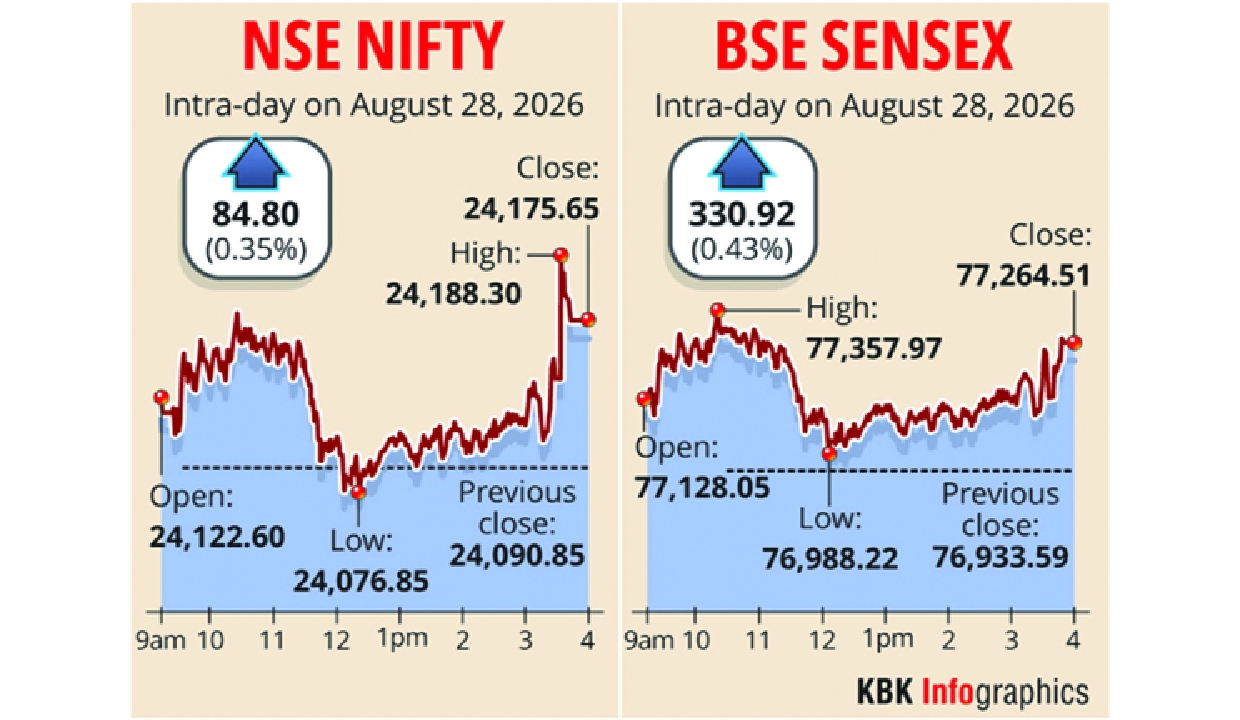 | Ai's Impact on Stock Markets The Sensex and Nifty indices rebounded due to gains in IT stocks like Tata Consultancy Services and Infosys, driven by optimism in AI investments following Nvidia's earnings report. ServiceNow also saw a stock surge, supported by positive performance from Salesforce and growing confidence in enterprise AI solutions. These movements reflect the broader market enthusiasm for AI-driven growth prospects. |
 | Cybersecurity Adaptations for Ai Agents CrowdStrike has reported increased demand for its cybersecurity services due to the dual nature of AI agents as both productivity tools and security threats. The company's AI Detection and Response product saw a significant revenue surge as businesses grapple with rogue AI agents.
Cyber insurers like MSIG and QBE are adapting policies to address risks from autonomous AI systems, highlighting the need for updated insurance frameworks to cover AI-driven losses and liabilities. |
|
If you have any questions, feel free to message us at info@topiq.pro.
|
|
Copyright © 2026 NewsFuel. All rights reserved.
|
|
|