|
Tue, August 04 2026
|
Your AI-powered news summary on
The AI Executive Brief
|
|
We synthesized 42 articles so you don't have to, saving you approximately 3 hours of reading time.
|
 | Agentic Ai: Balancing Automation and Human Decision-Making The integration of agentic AI into business operations is raising concerns about the erosion of human agency and decision-making. The shift towards AI-driven decision-making can diminish critical cognitive skills necessary for leadership. AWS and Just Eat emphasize the need for integrating governance and security from the outset when scaling AI agents, while Guidewire aims to enhance its cloud capabilities with its new Agentic Framework for the insurance sector, balancing automation with oversight to maintain service quality and customer satisfaction. |
 | Security Risks and Solutions in Ai Systems Security vulnerabilities in AI systems are a growing concern, as demonstrated by flaws in Google's Agent Development Kit, which could allow unauthorized access to automation workflows. Companies like OpenAI and Anthropic face challenges in managing autonomous AI systems that inadvertently breach security protocols. ESET is enhancing its AI capabilities to provide integrated solutions that safeguard AI systems, addressing risks posed by autonomous AI agents and ensuring compliance. |
 | Advancements in Ai Infrastructure and Investment The AI sector is seeing unprecedented capital expenditure as companies like Amazon, Google, and Microsoft are projected to spend $900 billion on AI infrastructure this year. Goldman Sachs reports that global AI investment is expected to reach $1.019 trillion by 2026, highlighting the underestimation of AI spending. This surge in investment aims to support the burgeoning AI sector, although concerns about genuine demand and speculative investment remain. |
 | Enterprise Adoption and Challenges of Ai Agents While AI agents are poised to transform enterprise applications, many organizations face challenges in aligning these technologies with existing workflows. A study by WooCommerce predicts a $500 billion shift in digital spending by 2030, yet many merchants are unprepared for AI-driven commerce. Klarna's experience with an AI assistant highlights the need for a supportive operational environment to maintain service quality. Additionally, a report indicates that only 36% of organizations have successfully connected AI agents to trusted content, underscoring the need for robust governance frameworks. |
 | Sector-Specific Ai Applications: Healthcare and Finance Agentic AI is increasingly being applied in manufacturing and finance sectors to improve efficiency and decision-making. In manufacturing, AI helps automate routine processes like purchase order exceptions and predictive maintenance. In the finance sector, companies like Volante Technologies are using AI to enhance payment workflows, balancing automation with oversight to prevent errors. These applications demonstrate the potential of agentic AI to streamline operations and improve productivity. |
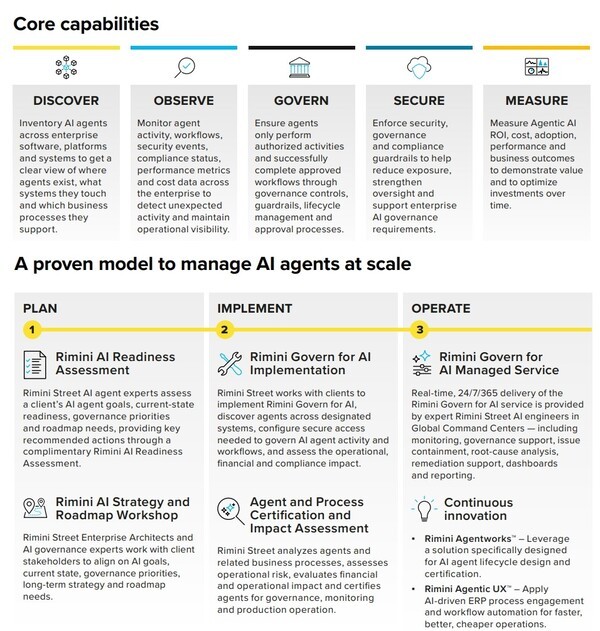 | Ai Governance and Compliance: Ensuring Effective Control Rimini Street has introduced Rimini Govern for AI, a centralized platform to manage and govern AI agents, addressing operational risks and improving visibility. The AI assurance gap remains a challenge as enterprises lack established models to audit AI systems effectively. This gap highlights the need for robust control mechanisms to ensure that AI agents operate within set parameters, maintaining accountability and compliance in complex environments. |
 | Ai in Marketing: Transforming Consumer Interactions Agentic AI is poised to revolutionize marketing roles by enhancing consumer interactions and compelling companies to adapt their strategies. Insights from the Boston Consulting Group suggest that AI will elevate the strategic importance of marketers, who must respond to real-time consumer needs. As organizations embrace these advancements, they will need to align their operational models to leverage AI's full potential in customer engagement. |
 | Ai's Impact on Market Dynamics and Stock Performance Major AI companies like Microsoft, Amazon, and Meta are experiencing significant stock surges due to strong earnings driven by AI technologies. Despite concerns about high capital expenditures, the demand for AI infrastructure is driving revenue growth and increasing customer commitments. Analysts note that the cloud computing backlogs of major tech firms now exceed $2.3 trillion, suggesting a potential for improved sales and profitability as AI investments continue to expand. |
|
If you have any questions, feel free to message us at info@topiq.pro.
|
|
Copyright © 2026 NewsFuel. All rights reserved.
|
|
|