|
Sun, July 19 2026
|
Your AI-powered news summary on
The AI Executive Brief
|
|
We synthesized 44 articles so you don't have to, saving you approximately 3 hours of reading time.
|
 | Enterprise Ai Adoption and Integration Trends A recent MIT study highlights that only 11% of S&P 500 companies have deeply integrated AI into their operations, with tech firms leading the way. Despite an increase since 2022, non-tech industries lag significantly, facing challenges in strategy and organizational adjustments. Microsoft is tackling AI ROI issues by deploying engineers to enhance AI system integration, addressing a gap where only 23% of manufacturers have effectively integrated AI, despite high ownership of Manufacturing Execution Systems (MES). |
 | China Pioneers Global Ai Governance Initiatives At the 2026 World AI Conference, China announced the establishment of the World Artificial Intelligence Cooperation Organization (WAICO) to foster global AI governance. This initiative, supported by 29 countries, aims to create a framework that balances innovation with security and emphasizes inclusivity and ethical development. President Xi Jinping's speech highlighted efforts to bridge the digital divide and promote international cooperation, contrasting with Western governance models. |
 | Agentic Ai's Growing Role in Enterprises Major banks are integrating agentic AI to enhance productivity in wealth management and client interactions, with a focus on maintaining accountability. In semiconductor manufacturing, advanced AI inference systems optimize processes through autonomous reasoning and real-time decision-making. Mediagenix is leveraging agentic AI in the media sector, introducing an AI model that automates workflows while ensuring human oversight, marking a significant advancement in enterprise AI. |
 | Ai Governance and Compliance in the Eu The European Commission's draft guidelines under the EU AI Act clarify the classification of high-risk AI systems, raising compliance questions for enterprises. Additionally, the EU's Health Technology Assessment Coordination Group has adopted AI governance principles to ensure transparency and accountability in health technology assessments, reinforcing the importance of human oversight and ethical standards in AI deployment within the healthcare sector. |
 | Investment and Valuation Surge in Ai Infrastructure Databricks has achieved a valuation of $188 billion following a significant funding round, reflecting strong demand for AI infrastructure. This investment supports their AI governance and agent platforms, crucial for enterprise clients. The company's growth highlights the increasing investor enthusiasm for scalable and cost-effective AI solutions, with a potential IPO anticipated by 2027, underscoring the strategic importance of robust AI infrastructure in the enterprise landscape. |
 | Ai in Health and Agriculture: Sector-Specific Advances Bunkerhill Health has raised $55 million to enhance its agentic AI platform, Carebricks, which improves patient outcomes in clinical settings. This highlights the transformative potential of AI in healthcare operations. Meanwhile, Cropin has launched OrbitAI, an AI platform for the food and agriculture sector, providing stakeholders with actionable insights to improve decision-making. Built on Google Cloud's infrastructure, OrbitAI demonstrates AI's capacity to democratize access to agricultural intelligence. |
 | Advancements in Ai Hardware: the Agentic Ai Boom The rise of agentic AI is driving demand for advanced CPUs, with AMD emerging as a leader due to its high-core CPUs designed for autonomous AI. This competition among AMD, Intel, and Arm Holdings is reshaping the data center market, as CPU requirements for AI applications increase. This trend underscores the shifting landscape in AI hardware, highlighting the need for strategic investments in high-performance computing capabilities. |
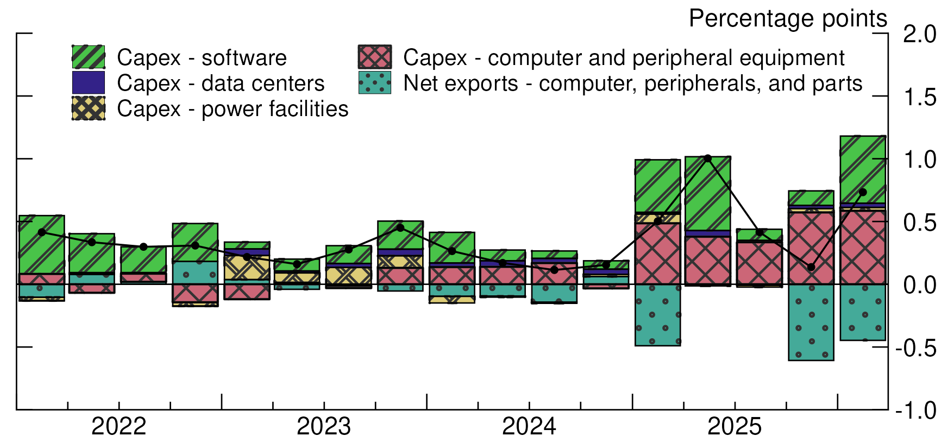 | Ai and Economic Growth: Capex Contributions AI-related investments significantly contributed to the U.S. GDP growth in Q1, accounting for 0.63 percentage points of the 1.6% growth rate. This underscores the crucial role of AI capital expenditures in driving economic expansion, despite not fully capturing efficiency gains across sectors. The analysis highlights AI's growing impact on modern economic performance, emphasizing its importance as a key driver of productivity and innovation. |
|
If you have any questions, feel free to message us at info@topiq.pro.
|
|
Copyright © 2026 NewsFuel. All rights reserved.
|
|
|