|
Mon, June 29 2026
|
Your AI-powered news summary on
The AI Executive Brief
|
|
We synthesized 46 articles so you don't have to, saving you approximately 3 hours of reading time.
|
 | Ai Governance and Compliance Challenges Recent surveys and reports underscore the rapid pace of AI adoption, which is outpacing the development of governance frameworks. A survey by Clyde & Co indicates that while AI use is expanding, only 68% of organizations have mature governance frameworks in place. The importance of robust AI governance is further echoed by Theta Lake, emphasizing the need for compliance and risk management. Meanwhile, KPMG's Global AI Pulse report highlights a gap between AI investment and ROI, stressing the role of governance in achieving business value. Legal challenges are also emerging, with an increase in copyright lawsuits against AI companies, stressing the need for compliance with intellectual property laws. |
 | Enterprise Ai Adoption and Strategic Partnerships Major collaborations are driving enterprise AI adoption. OpenAI has partnered with Samsung Electronics to integrate AI tools like ChatGPT Enterprise across Samsung's operations, marking a significant step in AI deployment. Similarly, Zeta Global and Palantir Technologies have formed a strategic alliance to enhance marketing execution through AI, highlighting the importance of data integration. In Thailand, Osotspa is leveraging AI systems on AWS to improve decision-making and optimize marketing efforts, showcasing the regional expansion of AI capabilities. |
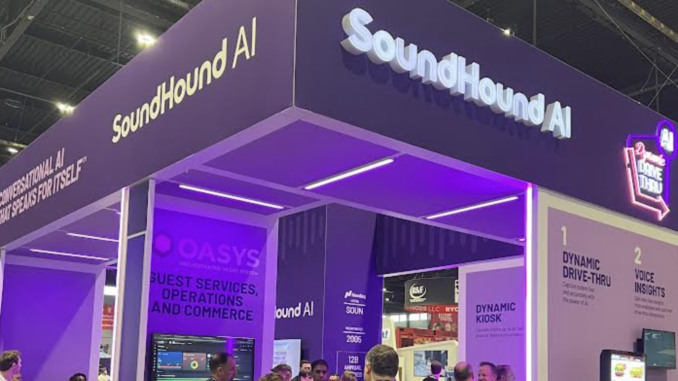 | Agentic Ai Transformations in Various Sectors Agentic AI is transforming industries by automating complex tasks. SoundHound AI is enhancing restaurant operations with voice and conversational AI to improve order capture and customer service. In the finance sector, agentic AI is seen as a means to shift focus from administrative tasks to strategic initiatives, as highlighted by research from Pleo. Meanwhile, Nory is bringing agentic AI to restaurant management, optimizing labor and inventory for better profitability. These innovations demonstrate the diverse applications and potential of agentic AI across different industries. |
 | Ai in Marketing and Data Standardization Efforts Zeta Global is emphasizing the importance of Snowflake's Open Standard Initiative (OSI) in standardizing data for enterprise AI, which can improve trust in AI outputs. Displayce has launched a suite of AI agents to revolutionize digital out-of-home advertising, showcasing how AI can streamline media planning and execution. Manago AI has enhanced its platform with agentic AI capabilities to simplify campaign execution for marketers, reflecting a broader trend of integrating AI into marketing strategies. |
 | Ai Governance in Geopolitical Contexts Global discussions on AI governance are evolving, with significant geopolitical implications. The G7 and VivaTech meetings have highlighted the need for robust AI ecosystems, as seen in the US restrictions on certain AI models. The European Union and India are exploring collaborations to enhance technology governance and cross-border data-sharing initiatives. Meanwhile, the Philippines is working towards a cohesive AI regulatory framework amid regional variations in ASEAN, underscoring the complexities of AI governance on the global stage. |
 | Ai Infrastructure and Economic Implications Advancements in AI infrastructure are shaping economic prospects. Arm Holdings has partnered with Oracle Cloud Infrastructure to enhance its AI CPU ecosystem, promising significant cost savings in data center capacities. Despite a surge in AI investment from under $100 billion in 2021 to projected trillions by 2030, concerns about rising input costs and funding challenges persist. Companies like xFusion are addressing these challenges by offering scalable AI hardware solutions, ensuring that enterprises can maintain efficiency amid growing demands. |
 | Security and Risk Management in Ai Systems Security concerns are rising with the proliferation of AI systems. CrowdStrike's Global Threat Report highlights the increase in prompt injection attacks, which exploit vulnerabilities in AI models, emphasizing the need for robust security frameworks. Similarly, the rise in cyber threats targeting language models necessitates treating these systems as untrusted components, urging enterprises to implement strict security measures to protect against data breaches and ensure safe AI deployment. |
 | Advancements in Agentic Ai Applications Agentic AI is driving advancements in various domains. Tecan has integrated agentic AI into its lab analytics platform, enhancing laboratory productivity and compliance with regulatory standards. In infrastructure, agentic AI is poised to improve asset management by connecting disparate data points, as discussed in a new EY report. These developments illustrate the transformative potential of agentic AI in improving operational efficiency and decision-making across different sectors. |
|
If you have any questions, feel free to message us at info@topiq.pro.
|
|
Copyright © 2026 NewsFuel. All rights reserved.
|
|
|